KNOXVILLE, TN, July 21, 2026 /24-7PressRelease/ — Biliary atresia (BA) is the leading cause of liver transplantation in children, yet even after corrective surgery, most infants eventually face liver failure. Now, a comprehensive review of emerging evidence points to the gut microbiome — the vast community of bacteria living in the digestive tract — as a critical factor in how this devastating disease unfolds. The findings reveal that infants with BA harbor a strikingly imbalanced gut microbial ecosystem, marked by an overgrowth of harmful bacteria and a severe depletion of beneficial microbes like Bifidobacterium. These microbial disturbances are present even before surgery and are strongly linked to poorer outcomes, including failure to clear jaundice and more rapid disease progression. The review suggests that the gut-liver axis — the two-way communication highway between the intestines and the liver — may hold the key to understanding why some children fare better than others.
BA is a progressive fibro-obliterative disease of the bile ducts that affects approximately one in 10,000 to 15,000 infants worldwide. The Kasai portoenterostomy, the standard surgical intervention, attempts to restore bile drainage by connecting the liver directly to the small intestine. However, only about 60% of infants achieve adequate bile flow, and even among those who do, ongoing liver injury often persists. Despite decades of research and various post-surgical therapies — including antibiotics, bile acid medications, and steroids — the majority of patients still require liver transplantation by early adulthood. The gut microbiome has emerged as a major player in liver diseases, but its role in neonatal and infant liver conditions — during a period when the microbial ecosystem is still developing — has remained largely unexplored. Due to these challenges, there is an urgent need for in-depth research into how the gut-liver-microbiota axis influences BA pathogenesis and clinical outcomes.
A recent review published (DOI: 10.1136/wjps-2025-001068) on January 7, 2026, in the World Journal of Pediatric Surgery synthesizes current evidence on the gut microbiome in BA. The work, conducted by Dr. Vandana Jain, examines microbial composition in patients before and after the Kasai procedure, identifies consistent patterns of dysbiosis, and explores how these microbial disturbances may drive disease progression through mechanisms involving bile acid metabolism, bacterial translocation, and immune modulation.
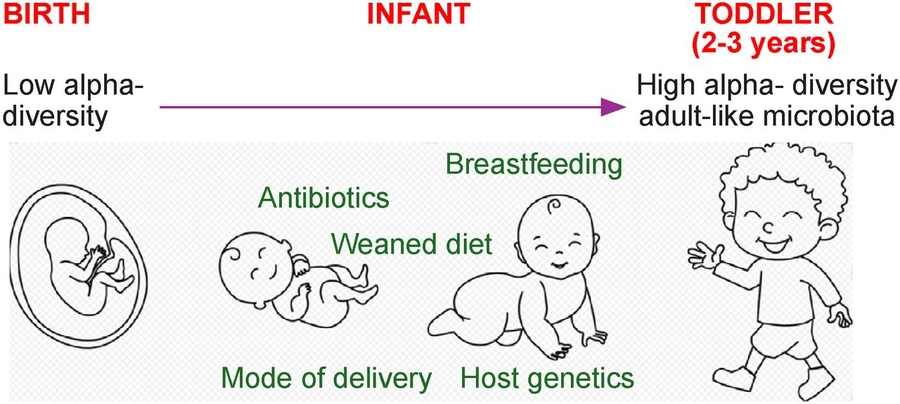
The review reveals a remarkably consistent microbial signature in BA across multiple studies, despite differences in patient populations and laboratory methods. Before surgery, infants with BA show a pronounced shift in microbial composition compared to healthy babies — with pathobionts such as Streptococcus, Enterococcus, Veillonella, Klebsiella, and Clostridium taking over, while beneficial commensals like Bifidobacterium, Faecalibacterium, and Blautia are severely depleted. This pattern persists and even worsens after the Kasai procedure, driven not only by ongoing cholestasis but also by clinical practices such as reduced breastfeeding rates and the routine use of broad-spectrum prophylactic antibiotics, both of which are known to suppress beneficial bacteria. Critically, the depletion of Bifidobacterium has been linked to worse jaundice clearance, increased liver fibrosis, and a higher risk of post-surgical cholangitis — a serious and common complication that further damages the liver. The review also highlights emerging evidence that microbial metabolites, particularly short-chain fatty acids like acetate and butyrate, may play protective roles, with butyrate showing potential anti-fibrotic effects in experimental models. Disruptions in bile acid metabolism, driven by gut bacteria through enzymes like bile salt hydrolase, further compound the problem, creating a vicious cycle of liver injury and microbial imbalance.
“The gut microbiome is not just a bystander in BA — it appears to be an active participant in disease progression,” the authors said. “We’re seeing consistent patterns where harmful bacteria expand and beneficial ones like Bifidobacterium are lost, and these changes correlate with how well patients do after surgery. The exciting part is that the microbiome is modifiable. If we can figure out how to protect and restore a healthy microbial ecosystem in these infants, we might be able to change the trajectory of their disease.”
The findings open the door to new therapeutic approaches for BA, where treatment options have remained limited for decades. Microbiome-modulating strategies — including probiotics, prebiotics, and potentially fecal microbiota transplantation — have shown promise in adult liver diseases and could be adapted for infants. Early studies with Lactobacillus rhamnosus GG have yielded mixed results, suggesting that strain selection, timing, and combination approaches will be critical. The review also calls for a re-evaluation of current clinical practices, such as the widespread use of prophylactic antibiotics immediately after Kasai procedure, which may inadvertently disrupt the developing microbiome. By integrating microbiome science into clinical care, researchers hope to improve native liver survival and reduce the need for liver transplantation in these vulnerable infants.
References
DOI
10.1136/wjps-2025-001068
Original Source URL
https://doi.org/10.1136/wjps-2025-001068
About World Journal of Pediatric Surgery
World Journal of Pediatric Surgery (WJPS), founded in 2018, is the open-access, peer-reviewed journal in pediatric surgery area. Sponsored by Zhejiang University and Children’s Hospital Zhejiang University School of Medicine, and published by BMJ Group. WJPS aims to be a leading international platform for advances in pediatric surgical research and practice. Indexed in PubMed, ESCI, Scopus, CAS, DOAJ, and CSCD, WJPS achieved the latest Impact Factor (IF) of 2.1/Q2 and CiteScore of 2.5.
The authors declare that they have no competing interests
—
For the original version of this press release, please visit 24-7PressRelease.com here
Legal Disclaimer: The content on this page is syndicated from independent third-party providers. Kyrion Media makes no warranties or representations regarding the accuracy, completeness, legality, or reliability of the information, including text, images, videos, or licenses. If you are affiliated with this content or have any complaints, copyright concerns, or requests for removal, please contact us at retract@kyrionmedia.com with the specific URL of the content in question. We will review and address valid requests promptly.